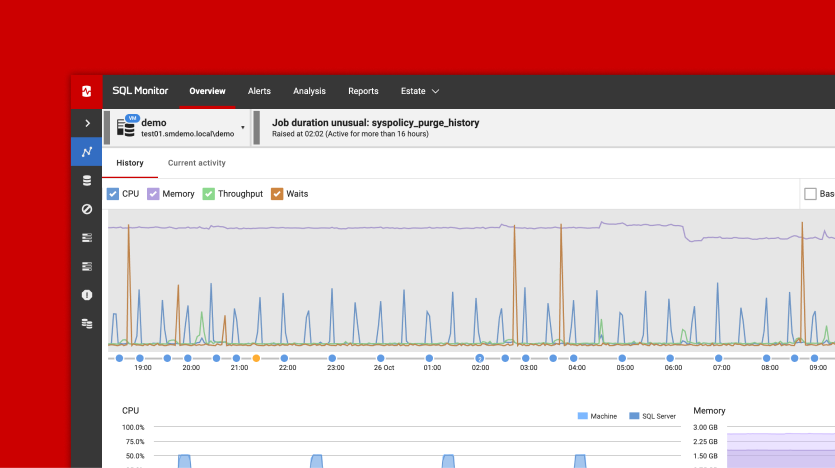
If your SQL Server estate is large, or installed across different, isolated networks, or both, then you need a distributed monitoring solution. It is very easy to set up multiple base monitors in Redgate Monitor, and then to manage the monitoring, alerting and troubleshooting for your entire SQL Server estate,…Read more
Overuse of ad-hoc queries by applications is a common source of SQL Server performance problems. The symptoms include high CPU and memory pressure. Phil Factor offers a simple custom metric to monitor the percentage of ad-hoc queries being executed on a database, and shows how Redgate Monitor can detect when…Read more
Use of the read committed snapshot isolation level is often an effective way to alleviate blocking problems in SQL Server, without needing to rewrite the application. However, it can sometimes lead to tempdb contention. This article offers a small-scale solution (not suitable for use on large tables) to detect cases…Read more
This article explains what SQL Server deadlocks are, why they occur, why they require immediate investigation, and the diagnostic data required to troubleshoot them. It then demonstrates an "Update Order" deadlock condition and shows how to find the cause quickly, in Redgate Monitor, using the Extended Events deadlock graph provided…Read more
Phil Factor demonstrates the performance problems that overuse of ad-hoc queries can cause and then how Redgate Monitor can warn us when they are the cause of these problems on your SQL Servers, using built-in metrics such as SQL Compilations/sec metric and Batch Requests/sec.Read more
This article uses the Spectre/Meltdown bugs as means to demonstrate how you can use a tool like Redgate Monitor to assess the impact of patching on the throughput and performance of your SQL Servers.Read more
Jon Hayman shows you how to set up Redgate Monitor to monitor Azure-based clustered SQL Server instances right alongside your on-premise clusters. Read more
This quick tip illustrates Redgate Monitor's built-in set of Performance Rules for static code analysis. These rules are designed to highlight SQL syntax that could potential cause performance problems, and so indicate ways to improve the overall quality and performance of the workload, over time.Read more