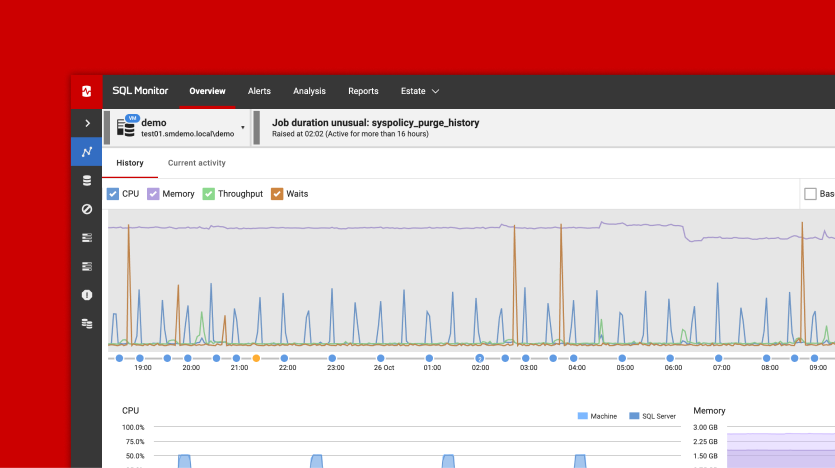
This article explores PostgreSQL's buffer cache hit ratio (BCHR), a metric tracked by Redgate Monitor to help you assess the health and performance of your databases. By correctly interpreting this ratio and using it with other relevant memory and IO metrics, you can identify potential bottlenecks in query execution before they impact users. Read more
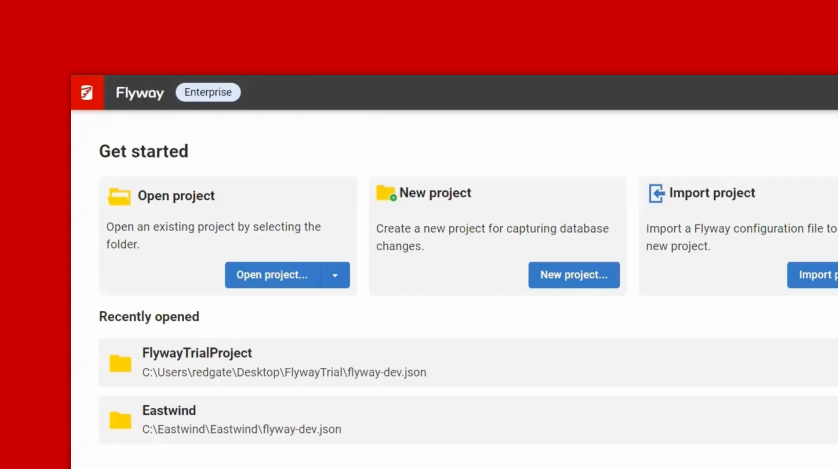
Environment Variables make interactive use of Flyway much easier, and they are essential when developing callback scripts. This article explains the range of configuration details you can provide and how, and demos a PowerShell script to auto-convert the parameter values stored in Flyway .conf files into environment variables. Read more
This article demonstrates how Redgate Monitor helps teams manage database incidents efficiently, by providing the right data to the right people, at each stage of a tiered incident response system. With fewer distractions from routine issues, specialist staff can focus on core tasks while teams resolve problems faster and prevent future disruptions. Read more
Redgate Test Data Manager is designed to provide secure, anonymized, and representative copies of production databases. This article focuses on the role of deterministic data masking, transforming PII consistently across tables, even when no logical relationship exists between them, and explains how it works. Read more
This article illustrates the importance in any database development project of a 'multi-layered' approach to database access controls and security checks, based on the Principle of Least Privilege. It describes a security incident that was raised when databases related to a local development project were found to have been erroneously deployed to a remote test server. It explains the nature of the incident, what went wrong that allowed it to happen, and the measures that were put in place to prevent its recurrence. Read more
Database forking allows teams to multi-task, working on different strands of development in parallel. It also allows them to manage several 'variants' of a production database, such as for SaaS applications with client-specific schema requirements. This article explains how Flyway supports and simplifies database forking, via use of Flyway's locations, baseline migrations and by mapping Flyway projects to schemas. Read more
The Repair command allows Flyway migrations to recommence on a database, following one or more validation errors. It modifies various details recorded in the schema history table, for applied migrations, to make them consistent with the data and metadata of the current set of Flyway migration files. This article explains what problems Repair can fix and how to run it safely, and a few alternative strategies. Read more
Current Activity for PostgreSQL in Redgate Monitor provides a real-time view of queries currently running on your PostgreSQL instances. It will allow you to identify quickly any queries that are currently causing blocking and resource contention issues on an instance. Read more
Maintaining a version of a database opens a lot of possibilities, especially if an automated process can easily grab the current version, at runtime. You might, for example, have a routine that is only appropriate after a particular version. It is also very handy to be able to associate entries in an event log or bug report with the database version. The article describes various ways to get the current Flyway schema version from Flyway, and how to get it using SQL, in SQL Server, MySQL, PostgreSQL and SQLite. Read more
This article discusses Flyway's transition from CONF to TOML configuration files. It highlights the advantages of TOML, such as improved readability, flexibility in managing complex database configurations, and support for specifying multiple database environments. It also discusses a few of the differences to be aware of when switching existing Flyway projects to the new config system. Read more