Security and compliance
Ensure data security and compliance with monitoring and change traceability
Ensure data security and compliance with monitoring and change traceability
Monitor and understand your databases with full visibility into performance and change
Build, test, and deploy database changes with confidence
Simplify and speed up database development workflows
Prepare reliable data foundations for AI initiatives
Simplify and secure database modernization across platforms
Control costs and boost efficiency in database operations
Simplify and speed up cloud database transformation
Database Change Management
Stop database deployments from being your riskiest release activity
Managing database changes remains one of the most complex and high-risk aspects of modern software delivery. Without standardized processes, teams face database drift, deployment failures or downtime, and unpredictable releases.
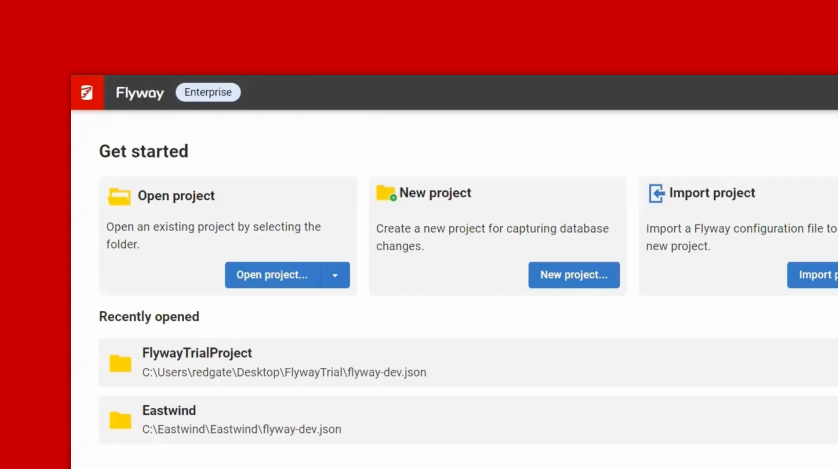
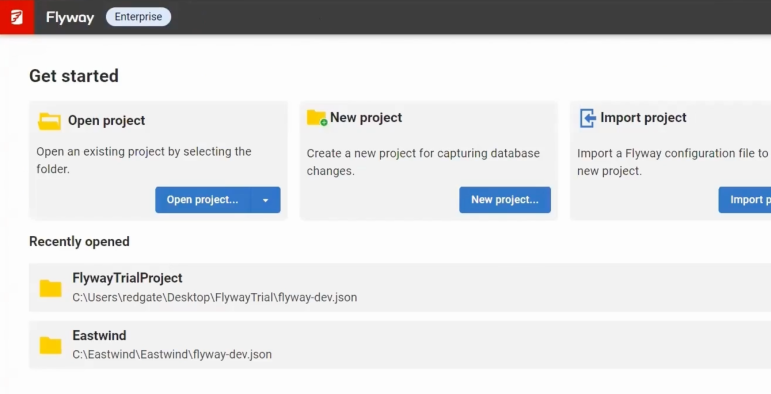
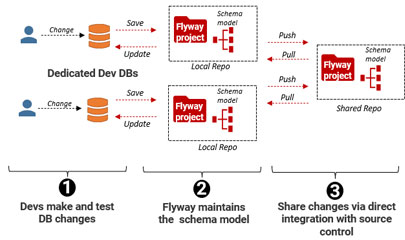
Redgate’s Flyway Enterprise, SQL Toolbelt Essentials and Productivity tools enable repeatable, auditable, and low‑risk deployments. With version control, automated deployment pipelines, and change tracking across environments, teams can reduce errors, avoid database drift, and deliver predictable releases. Integrate database development seamlessly into your existing CI/CD workflows, and ship changes with confidence every time.
25%
of downtime is caused by the database
33%
less profit over five years when a product is just six months later to market
$4.05M
the cost of downtime from suboptimal database practices
The business case rests on three numbers: the cost of failed deployments, the engineering time lost to manual database work, and audit exposure. Database changes are the highest-risk step of most releases - a failed change can mean hours of downtime and days of remediation.
Automating database change management removes the manual bottleneck, cuts failed-deployment rates, and produces an audit trail as a by-product of deployment rather than a separate exercise. The impact is measurable: organizations using Flyway Enterprise report an average 59% reduction in time per database deployment and a 7× reduction in change failure rate. One Fortune 250 financial services organization cut deployment times by 97% - from around 12 hours to 20 minutes.
Evaluate five things:
Five minimum controls:
Redgate Flyway Enterprise implements each of these as policy-as-code - which means the controls hold whether a change was written by a senior DBA, a new team member, or an AI coding assistant.
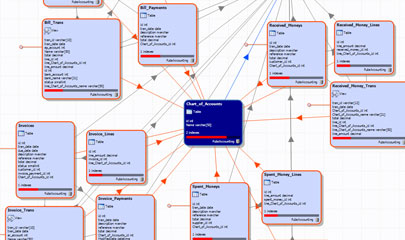
Easily track database changes across environments and generate change history reports in just a few clicks, enabling code review, approvals, and audit trails. Every change is traceable, from development to production.
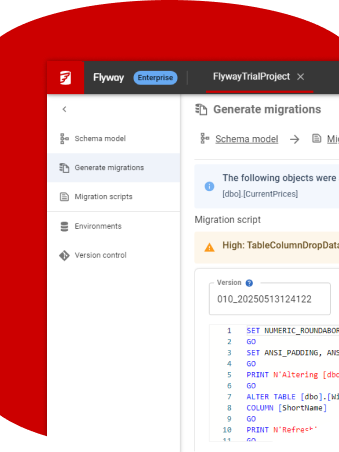
Standardize builds and deployments in your existing CI/CD system (GitHub Actions, Azure DevOps, Jenkins, and more). Generate repeatable build artifacts, run pre‑deployment checks, and deliver predictable, low‑risk rollouts.
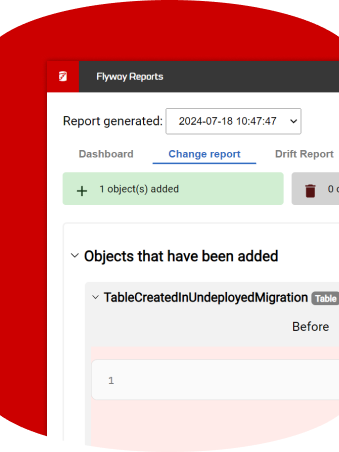
Detect schema drift early using database comparison and verification steps. Baseline legacy databases, validate target states, and enforce environment consistency to avoid failed or partial deployments.
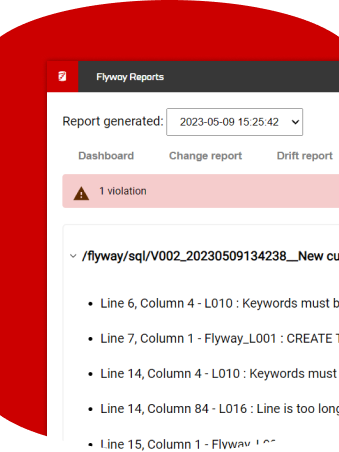
Use quality gates, dry runs, and automated code review checks to stop risky scripts from reaching production. Standardize roll‑forward strategies and post‑deployment verification to restore service confidence quickly when issues occur.
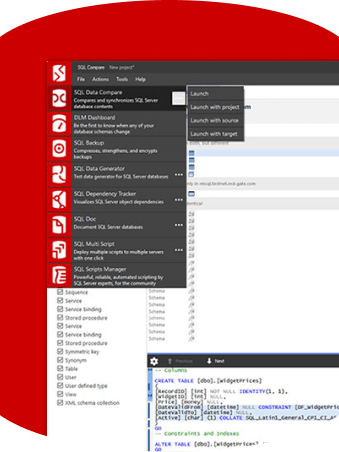
If you're not sure which product you need or have any questions about Redgate's database change management solutions - get in touch.
“We can develop fast and verify that our code is being deployed correctly. It’s hard because we have so much data, but it’s now possible and Redgate is what makes it possible. There isn’t an alternative that I could think of in the industry that would do a better job.”
Contact us to find out how Redgate helps build, test and deploy database changes with confidence
The business case rests on three numbers: the cost of failed deployments, the engineering time lost to manual database work, and audit exposure. Database changes are the highest-risk step of most releases - a failed change can mean hours of downtime and days of remediation.
Automating database change management removes the manual bottleneck, cuts failed-deployment rates, and produces an audit trail as a by-product of deployment rather than a separate exercise. The impact is measurable: organizations using Flyway Enterprise report an average 59% reduction in time per database deployment and a 7× reduction in change failure rate. One Fortune 250 financial services organization cut deployment times by 97% - from around 12 hours to 20 minutes.
Evaluate five things:
Five minimum controls:
Redgate Flyway Enterprise implements each of these as policy-as-code - which means the controls hold whether a change was written by a senior DBA, a new team member, or an AI coding assistant.
Ensure data security and compliance with monitoring and change traceability
Monitor and understand your databases with full visibility into performance and change
Build, test, and deploy database changes with confidence
Simplify and speed up database development workflows
Prepare reliable data foundations for AI initiatives
Simplify and secure database modernization across platforms
Control costs and boost efficiency in database operations
Simplify and speed up cloud database transformation