Product articles

Flyway and SSDT: Extracting a DACPAC from a Flyway-managed Database

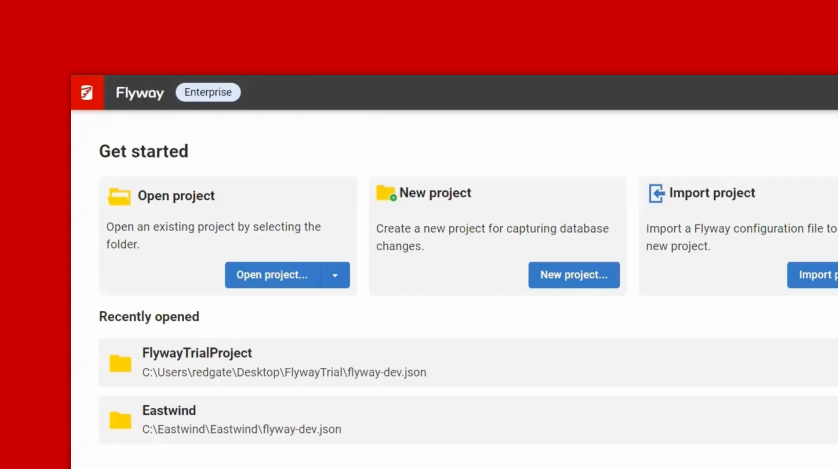
When you are integrating Flyway into an existing SQL Server SSDT development, you don't necessarily have to change everything at once. The development team might continue to use the SSDT tools, but Flyway will soon take over the deployments. This means that any automated processes will need to be able to handle both DACPACs and Flyway migration scripts with equal grace. In this article, I'll demonstrate how to automatically extract a versioned DACPAC from each new Flyway version of a database. Read more

Working with Flyway And Entity Framework Code First: An Overview

This article presents an approach to database development and deployment that combines the strengths of Entry Framework Code First for .NET-driven development with the control and database versioning provided by Flyway's SQL migrations. It allows every database change to be reviewed and tested for integrity, performance, and stability in the same way as any application change. It should make a Database CI process much easier to sustain. Read more

How to Automate Cross-Platform Database Development

In order to focus on their primary task of developing databases, the development team need to automate as many as possible of the routine tasks that are essential for database delivery, such as testing, scripting, version control, documentation, code review, reporting and so on. This article gives some advice on how to do it, faced with the added challenge of needing to use several different relational databases. Read more

SQL Prompt Safety Net Features for SSMS: SQL History

Mistakes occasionally happen. Sometimes you accidentally close an SSMS query tab without saving it, before realizing it contained an essential bit of code. Occasionally, you make some ill-judged 'refinements' to working code and now just wish you could rewind your tab back in time an hour and forget the whole sorry episode. Now and again, SSMS just conspires against you and crashes unexpectedly, and you lose all your currently open query tabs, some of which you hadn't saved. SQL History offers a useful safety net in the event of any of these unfortunate events. Read more