


The alerts worth your time. Resolved faster
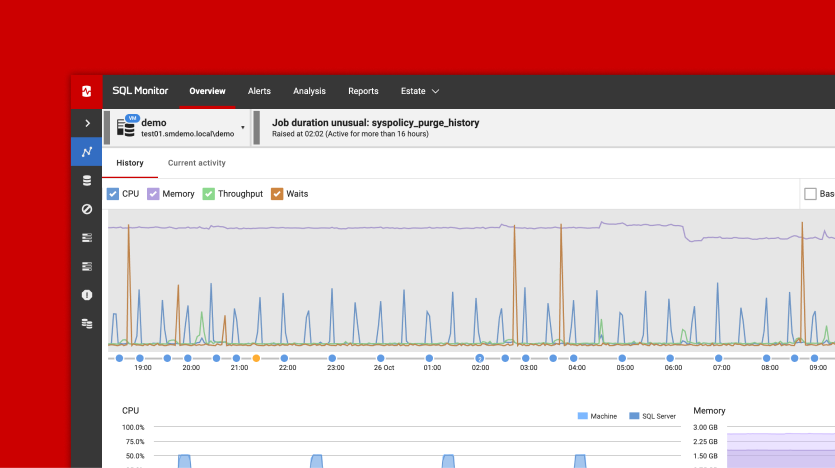
It's 7am. An alert fired overnight. You open your monitoring solution, navigate to the alert, cross-reference the waits, check the query plans. Twenty minutes later: it should not have fired.
You knew that before you started, but you had to check anyways.
The feeling of being overwhelmed by alerts is real. And so is the cost.
Thresholds set once and forgotten, firing on patterns that have been normal for months. The inbox fills. DBAs learn to ignore most alerts. The workaround becomes the workflow.
A team that can't trust its inbox isn't monitoring. It's hoping. And when something genuine fires, it lands in an inbox trained to ignore it.
We've been thinking about this for a long time. These are the first features we've built to fix it.
Focus on what matters.
Dynamic Alert Thresholds uses AI to learn what normal looks like for each server. Not a fixed line applied across the estate, a baseline built from each server's own history. Monday morning peaks stop triggering emergencies. The inbox gets smaller. What remains is worth your attention.
Redgate Monitor's ML model runs entirely on-premise in your environment. There's no cloud model, no centralized Redgate-hosted inference, and no sensitive data leaving your environment.
Just less alert noise and an inbox you can trust.
It's in Redgate Monitor v14.0.37.
Cut investigation time.
When something real fires, Redgate Monitor already has the data to explain it. AI Alert Analysis connects it. Likely cause, ranked by impact, what to do about it. Before you've opened a second screen.
You still make the call. That's the point. The feature isn't here to make decisions, it’s here to connect the dots, speeding up the initial alert investigation process.
Junior DBAs get answers. Senior DBAs get their time back.
It's in Redgate Monitor v14.15.
This is just the start.
Fewer alerts reaching your team. Faster resolution on the ones that do. That's the point. DBAs focused on the issues that actually matter, with less time lost to the ones that don't.
Both features use data Monitor was already collecting. That's intentional. The opportunity isn't in adding more data, it's in making better use of what's already there. There's more coming. See what we’re building next
Try Redgate Monitor for free | Redgate Monitor AI Data Handling
This document contains proprietary information and is protected by copyright law.
Copyright © 2026 Red Gate Software Limited. All rights reserved
Tools in this post
Redgate Monitor
Real-time multi-platform performance monitoring, with alerts and diagnostics
You may also like

Blog
Oracle Schema Existence Checks are Now in Preview in Flyway Enterprise

Blog
Redgate Monitor Product Updates - July 2026
Blog
Loading comments...