Security and compliance
Ensure data security and compliance with monitoring and change traceability
Monitor and understand your databases with full visibility into performance and change
Build, test, and deploy database changes with confidence
Simplify and speed up database development workflows
Prepare reliable data foundations for AI initiatives
Simplify and secure database modernization across platforms
Control costs and boost efficiency in database operations
Simplify and speed up cloud database transformation
What every CTO and CISO needs to know about AI and database change

Kellyn Gorman
Multi-platform database and AI advocate
Today AI has moved past the pilot stage and now is writing code, proposing database changes, and in a growing number of organizations, acting on production systems with limited human review.
Every CTO and CISO I've spoken to says they no longer need to make the case for whether AI belongs in the development lifecycle, as that argument is already settled. Now the major hurdle they face is how to govern AI well enough that speed does not become the thing that eventually slows them down.
This shift shows up clearly in how leadership priorities have moved over the past year. Data and AI governance have gone from a background compliance topic to the top item on agendas for data leaders, security leaders, and auditors. This is not a coincidence. It is a direct response to what happens when AI generates change faster than an organization's processes can absorb it.
Throughout the past 12 months, I had the pleasure of speaking extensively with c-suite executives and vice presidents at multiple industry events (Oracle World, AWS Summit, etc.) and as part of the 2026 State of the Database Landscape.
The perspectives collected in these personal interviews, combined with first-hand and second-hand research, serve as a guide for CTOs and CISOs that answers the toughest questions they face about AI and the database. The goal is to show why governance has become urgent rather than optional, and what a mature approach looks like in practice, particularly at the database layer, where the cost of an ungoverned mistake is the highest.
Modern database governance for most organizations means every change to a database follows the same rules, whoever or whatever wrote it. Policies are set up front, changes are checked and deployed consistently, and there’s a record of what changed, when, and who or what approved it. That makes it more than a database team concern. It now shows up at every layer of the organization that touches AI and data, and when it’s missing, the questions land on leadership: what changed, who approved it, and can you prove it.

Chief data and analytics officers now rank strengthening data and AI governance as the number one functional priority for their role, based on responses from more than 600 leaders in the position.[1] This is up from third place the year before, and 40% plan to invest in a governance platform this year specifically because of that shift.
Security leadership is repeating a similar story, but from a different angle. A survey of 1,600 CISOs found that 'Enabling and Protecting AI' is the top CISO priority for 2026.[2] What makes this exceptionally notable is that it is a brand-new category for the survey, yet it surged straight to the top the first time it was offered as an option. CISOs describe their core concern as agent access to sensitive systems, combined with the absence of identity and access management controls built for agents rather than people.
Auditors are noticing the same challenge. A survey of 160 chief audit executives found that 97% have regulatory compliance coverage planned for 2026, 96% are planning cybersecurity vulnerability coverage, and 94% are planning data governance coverage.[3] At the same time, confidence has not kept pace with attention, as only 48% of those same audit executives say they are highly confident in their ability to provide assurance over cybersecurity vulnerability risk.
Independent research backs this up from the practitioner level, too. A survey of more than 1,000 IT professionals found that data professionals are 12% more likely than IT executives to cite security and compliance as a barrier to adopting new tools.[4] This means the people closest to the systems are the most cautious, and for a very good reason – they spend roughly 27 hours a week on reactive or routine work, with much of it on manual firefighting what ungoverned change produces.
44%
AI usage in database management is up from 15% in 2025
The scale of AI adoption inside databases and data teams has changed dramatically in a relatively short period of time. AI usage in database management nearly tripled year over year, from 15% in 2025 to 44 % in 2026.[5] This is not gradual uptake, but a sudden, organization-wide shift in how database work gets done.
23%
of organizations report using a formal data governance framework
Data security and privacy is the top AI-related concern, cited by 64% of respondents, with regulatory compliance concern rising to 40%[5]. All the while, only 23% of organizations report using a formal data governance framework.
58%
say they are willing to accept higher risk in exchange for AI’s efficiency gains
It's even more striking that 58% say they are willing to accept higher risk in exchange for AI's efficiency gains. Put these three findings together and a pattern emerges: teams are adopting AI faster than they are building the structures to govern it, and they know it.
Most are proceeding anyway, betting the productivity gain is worth the risk exposure. That may be a reasonable bet for some organizations and a costly one for others, but it is rarely a decision anyone has made deliberately. It is usually just what happens when tooling outpaces the process.
The biggest risks of AI-generated code reaching production extend beyond more pull requests and delivery instability. Production issues are rising, and more AI-generated changes need debugging once they get there. A survey of more than 200 enterprise technology leaders found that 81 % report a rise in production issues linked to AI-generated code.[6]
81%
report a rise in the production issues linked to AI-generated code
Independent research backs this up with more granularity, showing 43% of AI-generated changes require debugging once they reach production[7], and 30% of developers reporting little or no trust in AI-generated code.[8] Perhaps most telling, higher AI adoption correlates with increased delivery instability, meaning that in many organizations, AI is currently making the system less predictable rather than more.
43%
generated changes require debugging once they reach production
Separate analysis found that AI-generated code carries 1.7x as many issues per pull request as human-written code.[9] None of this means AI-generated code is unusable, but simply means it needs the same scrutiny as any other source of change, and in practice it is often getting less.
1.7x
as many issues per pull request as human-written code
The financial case for addressing this is not abstract. A global survey of more than 1,000 firms found that more than 90% of mid-to-large enterprises report downtime costs of $300,000 or more per hour when an outage was experienced.[12] Separate research found a median of 77 hours of annual downtime from high-impact outages.[13]
If you multiply those two figures together it produces a rough illustrative exposure of roughly $23 million a year in downtime cost alone, a figure worth treating as directional since it combines two independent surveys rather than measuring just one directly. Even as a rough estimate, it puts a number on what an ungoverned pipeline is quietly risking every time a change goes to production without adequate review.
$300,000 × 77 hrs = $23,100,000 · Illustrative estimate based on data from independent sources

“The one thing I think every CISO needs to know about database change risk is that it concentrates at the database. AI is increasing the number of changes, and the database is where an ungoverned one does the most damage and is hardest to reverse. The answer isn't to slow down. It's to make sure every change goes through the same controls, whoever or whatever wrote it.”
Chris Yates
Senior Vice President, Managing Director of Data and Architecture, Republic Bank
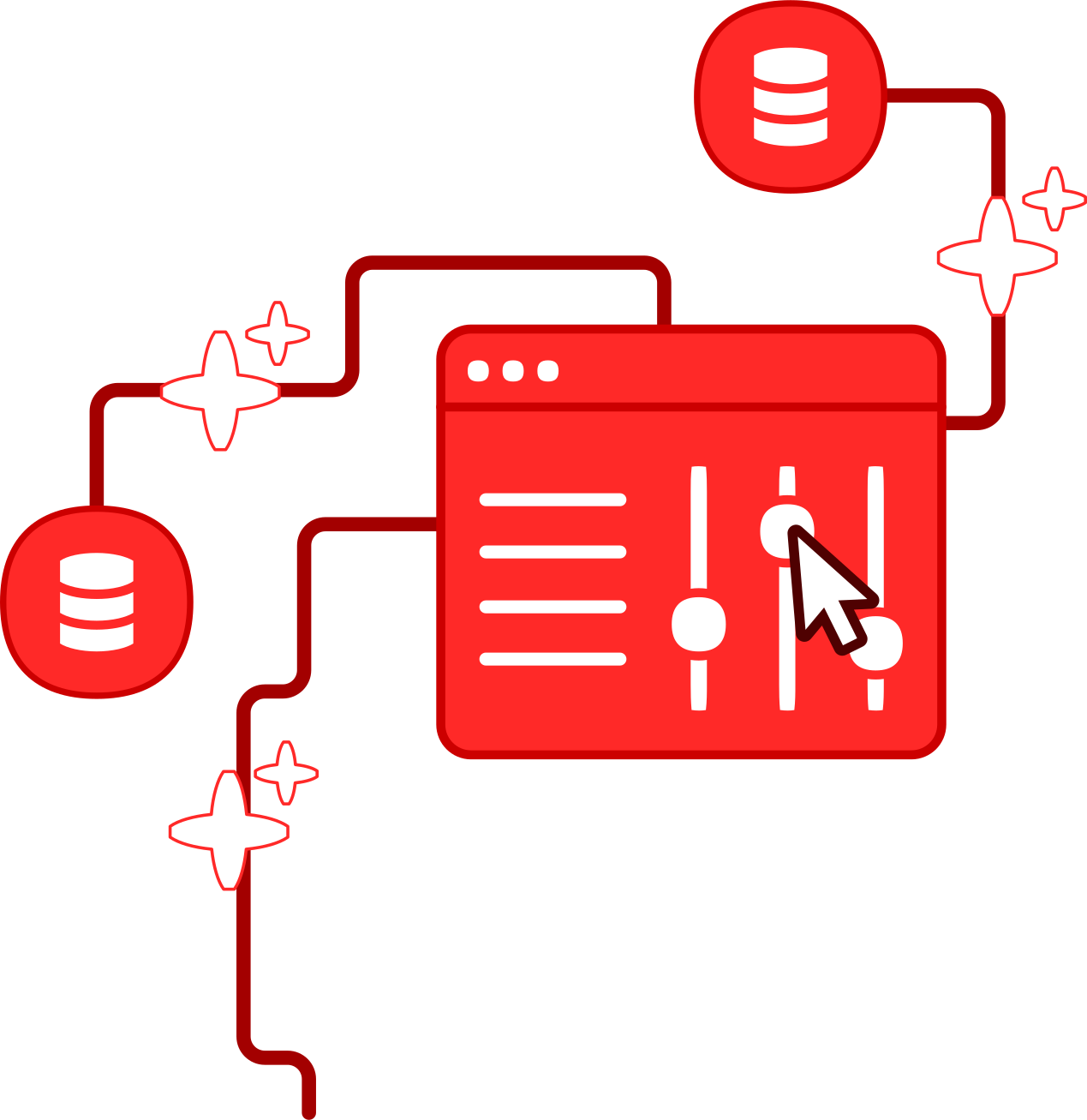
Before letting AI write database changes, enterprises need guardrails that govern every change the same way, whether a person or an AI wrote it. Organizations that govern database change report the same pattern: faster delivery, fewer incidents, and audit readiness. The model below outlines the five stages for governed changes that IT organizations should follow, independent of any tool.
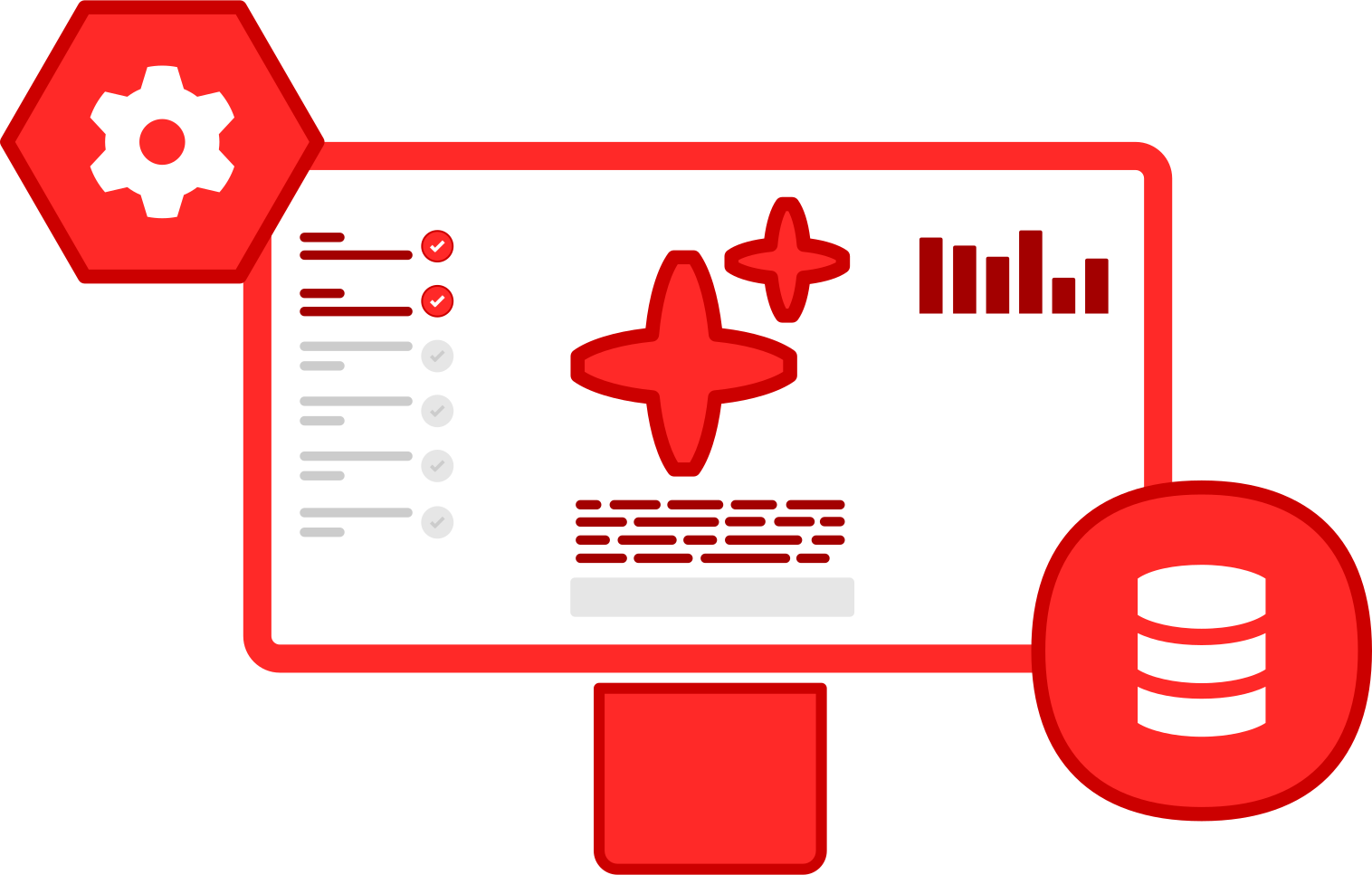
Once you have the guardrails in place, the next step is to decide where AI belongs in a workflow and when a deterministic, rules-based approach is the better choice. This is a distinction that is easy to lose in the rush to apply AI everywhere. Teams that get this right set realistic expectations for where AI adds value, which starts by knowing where it fits and where it doesn’t. AI is well suited for complex challenges, including interpreting messy input, summarizing unstructured data; in other words, handling cases that do not fit a fixed pattern. It is poorly suited to workflows that need the same input to produce the same output every time, that need to be auditable step by step, or that run often enough that token cost becomes material.
Reconciliation, migration validation, schema mapping, and alerting thresholds are usually better served by a rule that AI can help write, rather than a model that runs the decision itself at every execution. The most mature teams are not the ones using AI the most. They are the ones who can explain, for any given piece of the pipeline, exactly why they chose AI or a deterministic process, and what evidence supports that choice.

“The risk isn’t that AI wrote the change. It’s that nobody can show what changed, who approved it and whether it followed policy. If we build those checks into the path of every change it stops mattering who wrote it and you can restore the velocity and stay in control.”
Graham McMillan
Chief Technology Officer, Redgate Software
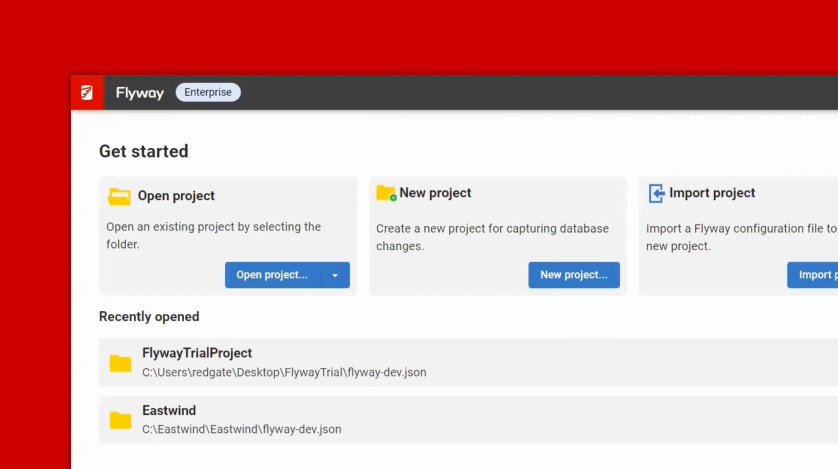
Redgate Flyway Enterprise supports each of the five stages for governed database change. It brings version control, policy-as- code checks before a change merges, schema drift detection, automatically generated rollback scripts and a complete audit trail to more than 60 database platforms.
It works with the CI/CD tools you already use, including GitHub, Azure DevOps and Jenkins, and it treats changes from AI coding assistants the same way it treats changes written by people.
For CTOs and CISOs who want to close the gap between AI adoption and AI governance, a few steps make the biggest difference in managing the risk of AI-generated code reaching production databases.
Start with an honest inventory and ask a few simple questions: which tools, AI coding assistants, and agents can reach a production database today, and under what credentials. That inventory alone often surfaces access that nobody remembers having granted, and most CISOs consider this a starting point for reducing the security risk of database changes.
Automate your database deployments. With 39% of organizations still deploying changes by hand, this remains the single most common blocker to reliable governance. Implement a version-controlled, automated deployment pipeline so that testing, auditing, and rollback become possible at the speed AI now demands.
Ensure you build the audit trail before an incident surfaces the issue. Waiting for a compliance audit to drive this work, which the data shows is the most common trigger today, means building governance under pressure rather than on your own timeline.
Give AI agents their own identity and their own scope. Treat this the same way you would treat any new class of user gaining access to sensitive systems, because that is functionally what an agent is.
Finally, put a simple test in front of every proposed AI use case: can the rule be written down, does it need to produce the same answer every time, and what does it cost when it is wrong? If those answers point toward a deterministic solution, encode it as an automated policy checks, and let AI help write the code rather than run the decision.


“Start with access. Every AI agent that touches a database gets its own scoped identity, not a shared login, with specific access. Every changes leaves a record of what changed and who or what approved it. Nothing should reach a live system outside that path.”
Steve Jones
DevOps Advocate and Microsoft SQL Server MVP, Redgate Software
None of this is an argument against using AI in the development and database lifecycle. The adoption numbers show AI-assisted development is here to stay, and the productivity case is real. The argument is that governance is what makes that speed sustainable rather than borrowed.
The organizations pulling ahead right now are not the ones moving fastest without looking back, but the ones who have decided, deliberately and in advance, how every change gets reviewed, who or what is accountable for it, and when the right answer is not AI at all. That discipline is what turns AI's speed into a lasting advantage instead of a growing liability.
If you'd like to talk through the five stages of governed changes that IT organizations should follow and what they mean for your own database estate, I'd love to hear from you. Use the resources here to contact me directly.
Speak with a Redgate specialist to understand how governing database changes can help your organization reduce risk, lower costs, and drive faster value.

Redgate has specialized in database software for over 25 years. Our products are used by 92% of the Fortune 100. 200,000 customers rely on Redgate worldwide.

Redgate offers comprehensive documentation and a friendly, helpful support team. An average 87% of customers rate our support 'Excellent'.