


2026 – Redgate Flyway – Starting strong with Oracle
Deploying changes to Oracle databases can be complex from working across multiple schemas, handling dependencies, and accounting for environment differences. Flyway has been helping teams bring order and automation to Oracle development for over 15 years and in 2026 we’re accelerating that investment even further.
Here’s a look at the latest enhancements available today and what’s coming next for Oracle users.
Recently released
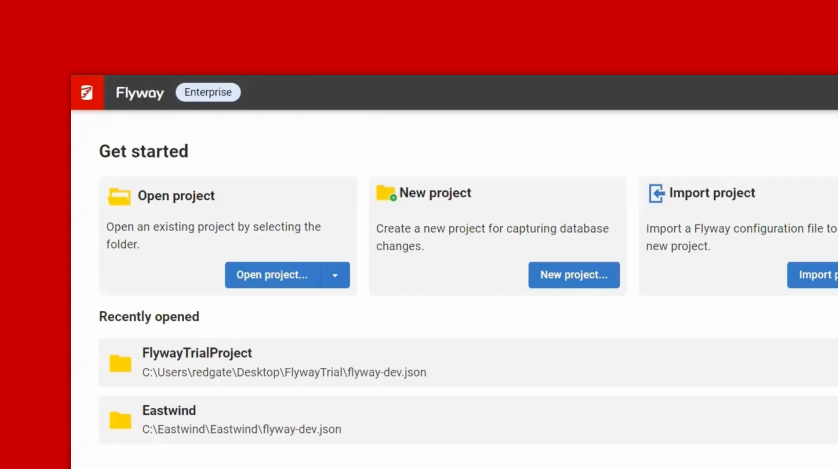
Oracle Filter UI in Flyway Desktop
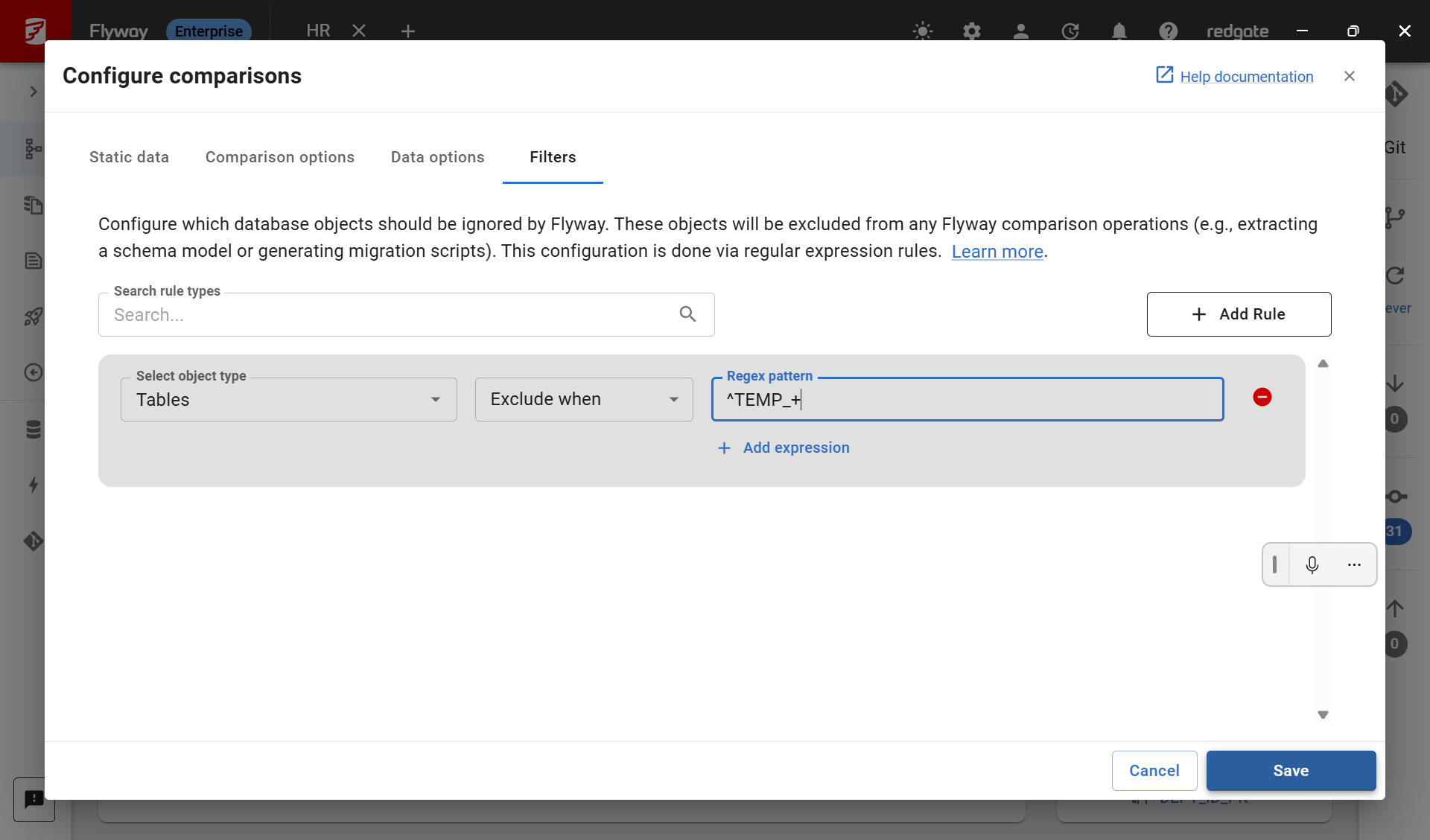
The challenge: Oracle schemas often contain thousands of objects, many of which you don’t want in version control. Editing filter files by hand made configuring what objects Flyway manages difficult and error‑prone.
The solution: Flyway Desktop now includes a dedicated Oracle Filter UI, shown during new project setup and accessible from the Schema model page, so you can customize your filter more easily. This makes filtering discoverable, reduces noise in version control, and can improve performance by excluding unnecessary objects.
Aligning casing for Flyway's meta tables
The challenge: Flyway’s meta tables use lowercase snake case to support over 50 database systems. In Oracle, this can cause confusion when querying due to case sensitivity.
The solution: Flyway now automatically creates capitalized synonyms for its meta tables (flyway_schema_history and flyway_snapshot_history). This removes friction for Oracle users and makes querying these tables more intuitive. Learn more from our advocate about these changes.
More control over dependencies
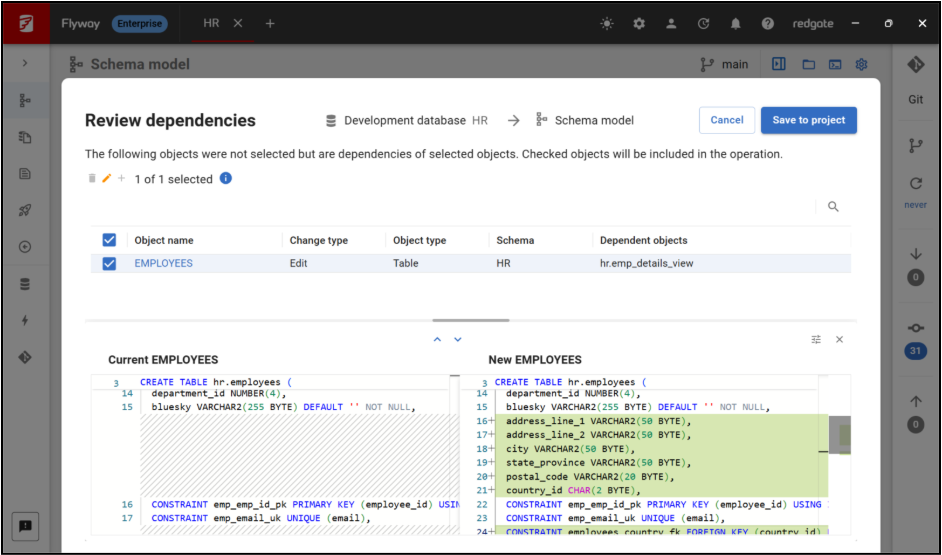
The challenge: When generating migration or deployment scripts, Oracle users need clarity on which dependent objects should be included — especially in large schemas.
The solution: A new comparison option lets you choose whether dependencies should be shown when tracking changes. By default, dependencies appear and you can decide which ones to include. This ensures related changes are deployed together and in the correct order. Read the full walkthrough on dependency control.
Better support for Oracle GoldenGate
The challenge: GoldenGate objects are often managed separately and shouldn’t be tracked in version control, especially when they only exist in Production.
The solution: Flyway can now filter out GoldenGate objects and columns, preventing unnecessary noise in your schema model and migration scripts.
In development
Support for ignoring invisible columns and indexes
The challenge: Many Oracle teams mark columns or indexes as invisible in Production rather than dropping them. If version control doesn’t capture this, Flyway may report false drift.
The solution: A new option will allow Flyway to ignore invisible objects during drift detection, reducing false positives and keeping reports focused on meaningful differences
Support for Oracle 23ai Vector Data Type
The challenge: Oracle’s new vector data type introduces modern AI‑driven capabilities, but tools need to understand and track it correctly.
The solution: Flyway now supports creating and dropping tables using the vector data type, with work underway to support alters as well.
If there are additional Oracle 23ai or 26ai features you’d like us to support, we’d love to hear from you.
Oracle roadmap
We’re continuing to invest heavily in Oracle support throughout 2026. Here are some of the key areas we’re exploring:
- Rerunnable migration scripts
Giving users the option to make migration scripts rerunnable, helping teams recover gracefully when a script partially deploys. - Expanded automated code review policies
Redgate already ships open‑source best practice checks and 15+ built‑in policies. We’re exploring additional Oracle‑specific policies that could benefit all projects. - Broader support for Oracle development workflows
Including deeper support for teams using Oracle APEX and other Oracle‑native development patterns.
Share your feedback with us
We’re actively speaking with Oracle users to understand how you develop and deploy database changes today and how Flyway can better support your workflow.
If you’re working with Oracle databases and open to a short conversation with our Product Team, we’d love to learn from you so please setup a quick call.
This document contains proprietary information and is protected by copyright law.
Copyright © 2026 Red Gate Software Limited. All rights reserved
Tools in this post
You may also like

Blog
Redgate Flyway's Product Updates – September 2026
Blog
Redgate Flyway’s Product Updates – May 2026
Blog
Loading comments...