


Seeing the Bigger Picture: What technical leaders can learn from evolving monitoring needs
Estate-wide clarity for leaders who still need technical depth
As data estates grow, the role of technical leaders changes. Visibility becomes harder. Communication becomes more important. Decisions have broader consequences. Many leaders start their careers focused on the technical details. Over time, they become responsible for the health and direction of the entire environment.
This shift has pushed many teams to take a fresh look at their monitoring tools. They’re asking whether their tools still give them the clarity they depend on. For many, the answer is starting to shift. What worked in the past no longer keeps up with the size or demands of their environment.
With this in mind, Redgate Ambassador and Republic Bank Senior Vice President and Managing Director of Data and Architecture Chris Yates recently shared how this shift changed what he needed from a monitoring approach. His experience reflects what many technical leaders face today. They need clarity that supports both technical depth and business-level decision-making.
Read his full post at “Seeing the Bigger Picture: How a Monitoring Tool Changed My Approach to Estate Management.”
From the Trenches to the Balcony: See the whole estate without losing the details
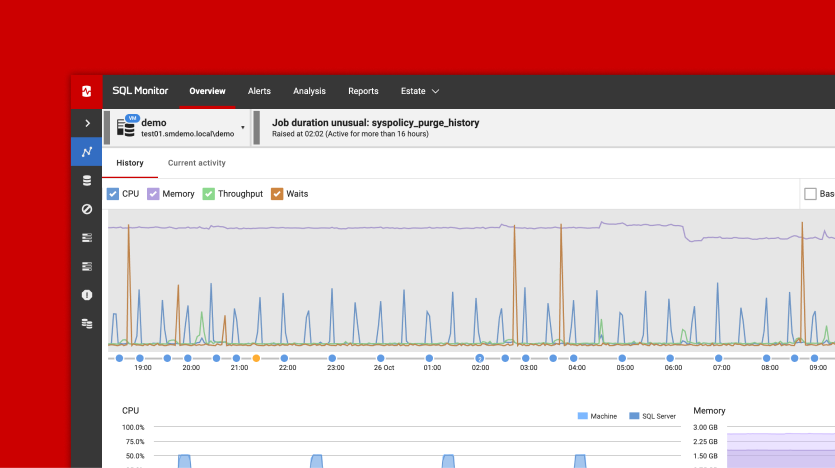
Early in his career, Chris focused on individual servers and workloads. Detailed metrics mattered most. As his responsibilities expanded, the view he needed changed. He needed to understand the health of the entire estate. He also needed the ability to drill into specifics when something required attention.
This shift wasn’t about more data. It was about better context. Seeing changes clearly and spotting risks early helps leaders plan their resources more effectively. When they have that clarity, decisions come more easily.
Chris explains this transition in more detail in his original post.
Reporting that Builds Confidence across Technical and Business Teams
As Chris moved up in the organization, reporting became more important. Trends, risks, and priorities had to be reported to and understood by technical and business audiences. That required clear, consistent information.
Better reporting didn’t just save time. It improved conversations with leadership. It helped him justify decisions. It reduced friction between teams. It created trust.
For IT leaders, this is a core business impact. Clear reporting strengthens alignment and supports better outcomes.
Strike the Right Balance: Built for oversight. Reliable for diagnostics.
Leaders often move between strategic oversight and technical problem solving. They need tools that support both. Chris talks about the importance of this balance. He needed visibility across the estate, but he also needed enough depth to understand what was happening when something went wrong.
The right balance helps leaders focus, manage their resources, and avoid the surprises that can throw an environment off course.
What Hit Home for Me: Clarity that helps you focus on what matters most
Chris values clarity and confidence. He wants to understand the health of his environment without wrestling with data. He wants to trust the information he brings into leadership conversations. He wants to spend his time on the decisions that matter.
Many leaders feel the same. At some point, their monitoring tool stops giving them the visibility or confidence they rely on. When that happens, they begin looking for an approach that fits where their role is heading. They also look for something that can support the growth of their estate.
His experience highlights an important point for TBIs. As your role changes, your monitoring approach has to change with it. The goal is not more data. The goal is better insight.
To explore Chris’s full story in his own words, visit “Seeing the Bigger Picture: How a Monitoring Tool Changed My Approach to Estate Management.”
If You're Facing Something Familiar
Wondering if your monitoring tool still does the job? It may be worth exploring how Redgate Monitor works in your own environment with a free trial.
This document contains proprietary information and is protected by copyright law.
Copyright © 2026 Red Gate Software Limited. All rights reserved
Read next

Blog post
14 Reasons why Redgate Monitor is the best choice for your database monitoring needs in 2026
If you’re evaluating Redgate Monitor or considering a change from your current monitoring tool, Redgate is a strong choice, backed by a 4.5 out of 5 rating on G2, and winner of 14 new badges in G2’s Spring 2026 awards. Here are 14 reasons to consider Redgate Monitor for your database monitoring needs. 1. Continuous Innovation Redgate Monitor is continuously enhanced with new features and updates to keep your monitoring solution ahead of the curve. Eight dedicated in-house teams are focused on advancing Redgate Monitor, and our weekly release cadence ensures you always have access to the latest capabilities and

Product learning article
Better Database Incident Management with Redgate Monitor
This article demonstrates how Redgate Monitor helps teams manage database incidents efficiently, by providing the right data to the right people, at each stage of a tiered incident response system. With fewer distractions from routine issues, specialist staff can focus on core tasks while teams resolve problems faster and prevent future disruptions.
You may also like

Blog
Announcing the Flyway Docker provisioner, now in Preview in Flyway Enterprise

Blog
Loading comments...