Deploy Redgate Test Data Manager into your own AWS account with a single CloudFormation click. Get a secure, production-ready environment for classifying, masking, and subsetting database copies in under 30 minutes, no infrastructure project required.Read more
Redgate Test Data Manager now ships as a Docker image. Pull it, run it, and you're in the product in minutes. For teams working with containers, this is the fastest way to get started. Read more
Using live data outside production is one of the fastest ways to create compliance risk, because it quickly becomes harder to control who can access it, how it is handled, and how long it is kept. A Test Data Management (TDM) approach provides exactly the kind of controls SOC 2…Read more
Redgate Test Data Manager's latest release adds Entra ID authentication, multi-target anonymization, and direct treatment code editing with workflow improvements to make pipeline management faster and more flexible.Read more
The test data management market has told smaller companies the same story for years: compliance is complex, implementations take six months, and you need consultants to get there. Redgate thinks that's wrong, and wrong by design. There's a faster, simpler path to compliant test data. And it starts in 30…Read more
The January release of Redgate Test Data Manager introduces a 28-day free trial, a redesigned setup wizard, and new workflow capabilities, including reusable workflows and dry run validation, making it faster than ever to get started and easier to automate your data provisioning pipelines.Read more
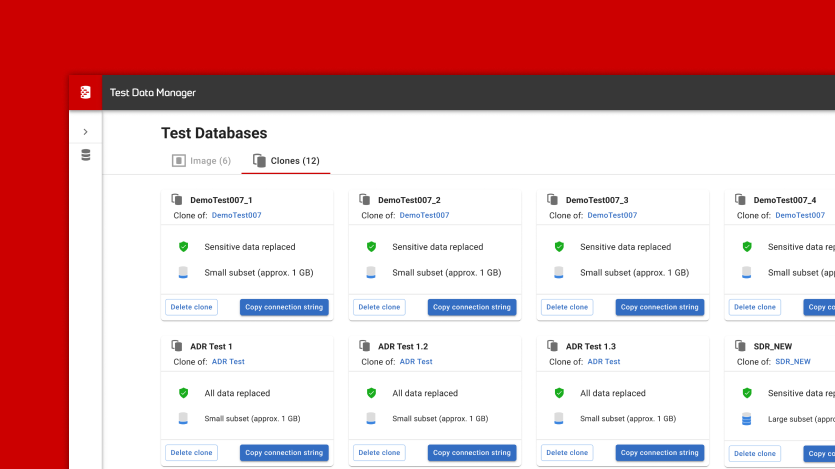
Think proper test data management means enterprise price tags, consultants, and months of setup? It doesn't have to. Discover why production copies and DIY scripts carry more risk than you think, and how Redgate Test Data Manager delivers compliant, masked test data in minutes, not months.Read more
After three decades of working with databases, one thing I’ve seen over and over is this: we don’t treat our development and test environments with the same respect we do our production systems. Not because people don’t care. Far from it. It’s usually because teams are under pressure, everyone’s…Read more