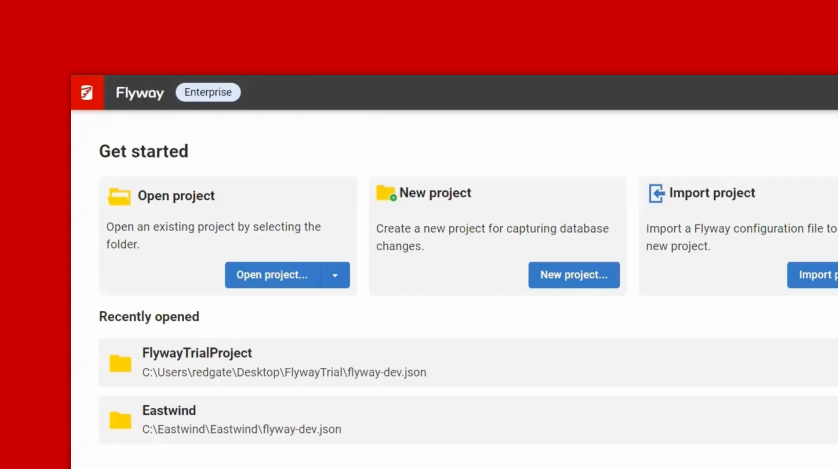
Flyway is an open-source database deployment tool that also includes a paid tier called Teams. Since it’s open-source, you can just download Flyway and run it for free. You’ll get a robust DevOps tool to assist you in deploying your databases just like you deploy your code. It just works.…Read more
A new case study shows how Desjardins uses Flyway Teams to standardize the way migration scripts are created and versioned across its multi-database estate, which includes Oracle, SQL Server and PostgreSQL. With assets of over $350 billion and seven million members and clients, Desjardins is the leading financial cooperative in…Read more
At Redgate, we strongly believe that all databases should be managed and orchestrated in the same way, with the same standards of security and quality in releases. For the past few years, we’ve been leading the adoption of database DevOps by focusing on the most challenging parts of the process…Read more
18 months ago, Redgate embarked on a new and ambitious journey with the acquisition of Flyway. It’s been quite a ride since then and we thought we’d end 2020 with an update on what’s been happening with the world’s most popular open source migrations framework for database deployments. We’ve learned…Read more
Git Hooks are scripts that can be run in response to certain actions. Git Hooks are defined for each repository within your system. By design, the Hooks are not transmitted between repositories. The idea behind the design is that an evil actor can’t introduce automated code to anyone’s machine. I’m…Read more
The first time you try to automate a database deployment using any of the available flow control tools, all the moving parts makes the task look insanely difficult and this is not any different within the AWS Developer Tools. However, after you get over that initial shock, the processes are…Read more
A lot of work with Flyway is going to take place on development machines with the Flyway command line installed. Another healthy chunk of the work will be on dedicated instances used for Continuous Integration (CI) or Continuous Delivery (CD), again, with the command line installed. However, what happens when…Read more
Frequently when we demonstrate how our tools work, we take the happy path. Everything is configured correctly. Nothing goes wrong. We introduce a simple change and, ta-da, everything works. However, it’s important to know just how things work when the path isn’t so happy. For example, what if, like I…Read more