Red Gate, described by our founders...

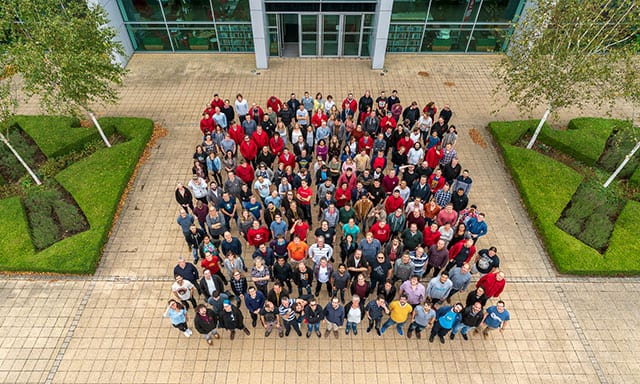
The two of us founded Red Gate* in 1999 and 13 years later, we're both still intimately involved in running the company as joint Chief Executives**. Now, there are around 250 people at Red Gate and we've been repeatedly recognized as a great place to work. We're privately owned and financed, have no debt, and nearly always earn more than we spend.

Our products are used by hundreds of thousands of people, and most of the organizations you've heard of have bought some of our stuff. You can take a look at our testimonials to get a feel for what our customers think of us.

We make products that are technically challenging to create, yet are really intuitive – we call it "ingeniously simple".

The early days

When we founded the company, we started out with the following goals :

There's something really important missing here but it took us quite a while to spot.

Our first product was Aardvark, a bug tracking tool. We worked on it for about a year. Then in April 2001 we started work on our second product, ANTS Load, a load testing tool that targeted web applications written in .NET. We worked on that for another year or so, before starting on our third tool, ANTS Profiler a code profiling tool for .NET applications.

So, at the start of 2003, we had three tools that we'd spent nearly all our effort on. They were OK. They were good start-outs, and for some niches they really were the best product available. But overall they were very much version 1 efforts. Each tool had the opportunity to be great for our customers, and each one was a good enough idea that we could have built a bigger company from it than we've got now. But we pretty much blew all those opportunities.

We blew those opportunities because of our inexperience, myopia and confusion; and due to our early financial success. We were chumps.

We were chumps because we hadn't at that point ever visited a customer. We were chumps because we never watched our users, or potential users, try to solve their problems with our software. We were chumps because we didn't really listen to what our sales team was telling us about the products, and what the people trying the products out were telling them. We knew very little about the market, what our customers needed, or anything much about them.

This was the big thing that was missing.

Because we hadn't listened to our customers, we didn't push on with our bug tracking product and do a better job than Atlassian ultimately did so brilliantly with Jira. Because we hadn't listened to our customers, we didn't make load testing as simple as we needed to, and we didn't make ANTS Load the blockbuster it should have been. Fortunately for us, no-one else really beat us to the profiler market, and we did finally get around to making a great version of ANTS Profiler. But only after letting it get close to death.

The thing that was missing from our initial goals was understanding what was in it for our customers.

You're probably wondering now how we survived? First, we were lucky. Second, we did do a few things right too:

A turning point

In February 2003 we got together as a company to brainstorm what we should do next. We figured it should be something new – we'd done the old stuff right, after all. There were about ten of us and we made paper airplanes to try and get our creative juices flowing. But the brainstorm yielded no ideas that even chumps like us wanted to have a go at.

That failure is the most important moment in our history. It was the moment we stopped being a mediocre company, and started attempting to become a great company. We realised that as well as doing the things we knew we were good at, we had to deliver software that was genuinely wonderful for our customers. We had to do it by focusing on those customers.

When we couldn't think of what to do new next, we decided to work on a new version of SQL Compare. It was already good; in fact at the start of the project we thought it was pretty much done. So we thought it would be easy. We were wrong, and users bombarded us with their views about how. It was impossible to ignore them, so we ended up throwing away all the code and starting from scratch.

Version 3 was 100 times faster; it had a radically simpler, but better UI; and it worked in a much wider range of cases. It was this version that ended up selling so well and being the foundation for the company.

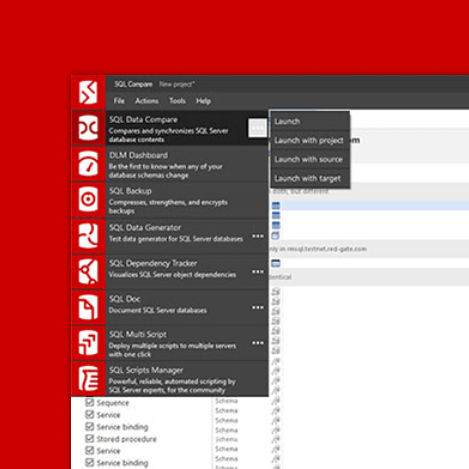
From SQL Compare we built a suite of tools we now call the SQL Developer Bundle.

If you're a developer working with SQL Server, we've a ton of useful stuff to offer. It's useful because of the feedback you, our users, gave us. You told us about the problems you have, and whether we're solving them and making sure it works in your specific environment.

We've done something similar for DBAs and others managing SQL Servers with our DBA Tools. Through the feedback from our users over the last decade we've come up with a suite of tools that make your job easier, and that save you costs in hardware, other software, and time.

After quite a long pause we finally got around to making ANTS Profiler great, too. Using a pioneering development process, influenced by Bill Buxton we made some fabulous software for .NET developers.

Over the years we've become less proud. Some of our tools were bought from other people. We've seen our job as working out how to make them great for our customers, rather than having to have the idea ourselves. So if you think you've got something we could buy off you and take to the next level, please let us know – we're always interested.

Red Gate today

Most recently, we've been trying to do bolder, braver projects that make a substantial contribution. We see this much more broadly now, too. We still aim to do technologically challenging things, but we're even more focused on making sure that what we do really works for our customers.

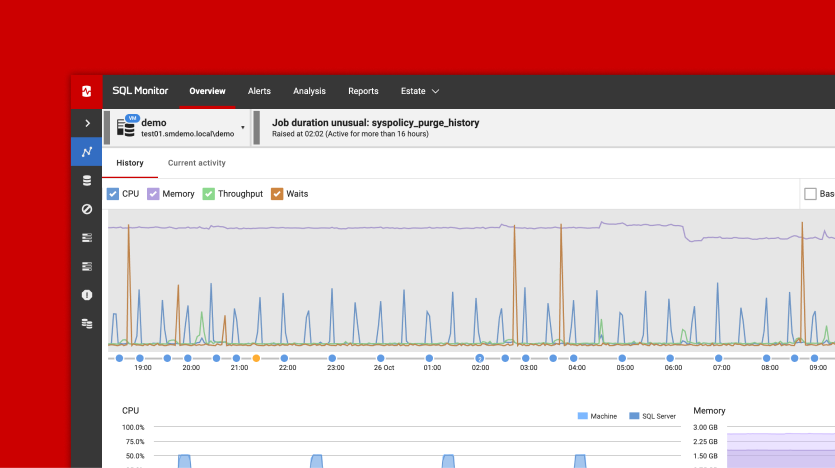
For example, we think that using Smart Assembly can make creating software faster, and more stable. It certainly has for us. Our SQL Source Control product allows you to source control your database in the same way as you do application code, and using the source control systems you ask us for. We're trying to explore the future of monitoring with SQL Monitor.

These aren't punts in the dark anymore; they're based on a really deep understanding of customers and their needs. Although we employ project managers, product managers, usability specialists, and technical communicators, in fact, from the team's point of view, everybody has the job of making sure a Red Gate Product delights the customer. It's all about an attitude that a great piece of software starts and ends with the person who is going to use that software.

We need our customers' input as much as ever, so please give us your feedback, whatever it is, and we'll do our best to take it on board. If we're ignoring you please write to one of us directly. We'd rather you hurt our feelings now than be chumps again.

Simon Galbraith and Neil Davidson, 1st December 2010.


*Red Gate is named after the street where Neil lived in Florence, Italy.

** People often ask us what it is like sharing the top job. We've not tried doing it alone, but in general we think it is much more fun and motivating sharing the role.

We are a private limited company, registered in England, with registration number 3857576. Our VAT registration number is 733599305.

Working at Red Gate
We've been independently verified as a great place to work! Find out about:

Current opportunities
Benefits
Culture
Recruitment process
Ask.SqlServerCentral.com
Visit our rapid fire stackoverflow-style Q&A site for all things SQL Server. Ask questions, answer them, vote good answers up and bad ones down, build your reputation in badges.

SqlServerCentral.com
Simple-Talk.com
Visit our online technical journal and community hub for SQL Server, .NET and Exchange professionals.

Simple-Talk.com